
The Menopause Equality Gap: Why Black Women Experience More Symptoms but Receive Less Support


As a natural health educator and health coach, I was not in favour of the use of HRT for the management of menopausal symptoms. In fact, I discouraged many of my own female clients to look at natural alternatives which they found useful in managing the more well known symptoms such as hot flashes and night sweats. I was one of the millions of women who read the results of the Women's Health Initiative hormone replacement study (HRT) study results, and what was said at the time gave little hope to women who may have want to try it. All of this seemed to work for myself and my clients until it was my turn to see the hormonal shift in my own body, and I was not liking it.
I began my own journey for answers, and this is some of what I have learned, and I have taken on board much of the available information without abandoning the natural approach to health that I know, and love. This is what I am sharing with you here.
____________________________________________________________________________
Menopause is often described as a universal female experience. Every woman who lives long enough will eventually reach it, yet the quality of menopause care she receives may depend heavily on her ethnicity, income, location and whether her symptoms are taken seriously.
Research increasingly reveals an uncomfortable contradiction: Black women often experience more frequent, more severe and longer-lasting menopause symptoms than white women, yet they are considerably less likely to receive hormone replacement therapy or equivalent specialist support.
This is not simply a matter of personal preference. It is a health inequality involving symptom recognition, medical communication, access to treatment and the assumptions made about Black women’s health.
Black women are not experiencing a completely different menopause
Black women generally experience the same broad range of menopause symptoms as other women, including:
hot flushes and night sweats;
disturbed sleep;
fatigue;
changes in mood;
anxiety;
brain fog and difficulty concentrating;
vaginal dryness;
painful sex;
urinary symptoms;
joint and muscular discomfort;
changes in weight, body composition and metabolic health.
The difference lies primarily in the frequency, severity, duration and cumulative burden of certain symptoms.
In particular, the evidence is strongest for vasomotor symptoms—the medical term for hot flushes and night sweats.
Hot flushes and night sweats may be more severe
The long-running Study of Women’s Health Across the Nation, commonly known as SWAN, has followed women from several ethnic backgrounds through the menopause transition.
Its findings show that Black women are more likely than white women to experience:
any vasomotor symptoms;
frequent hot flushes and night sweats;
symptoms described as bothersome;
persistent symptoms continuing across different stages of menopause.
More recent SWAN analysis confirms that the greater burden remains visible even after researchers account for several health, behavioural and socioeconomic factors.
A 2026 systematic review and meta-analysis also found that Black women had substantially higher odds of experiencing vasomotor symptoms and severe vasomotor symptoms than white women.
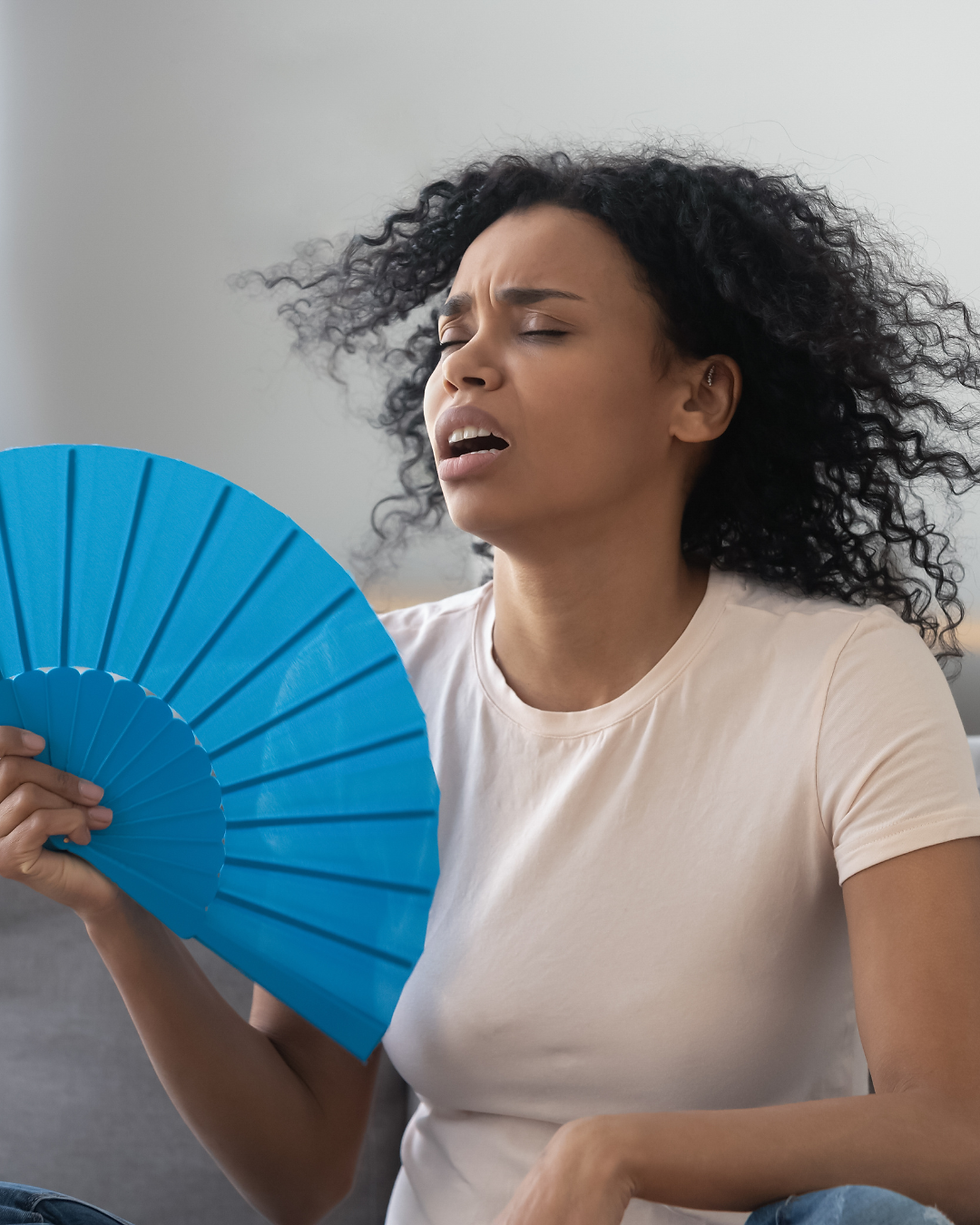
This distinction matters. A mild flush once or twice a week is not the same as repeatedly waking drenched in sweat, changing nightclothes, struggling to return to sleep and then attempting to function normally the following day.
For some women, the hot flush lasts minutes. The consequences can last all day.
Symptoms can continue for a decade or longer
Women are still frequently told that hot flushes should last only a year or two. Large longitudinal studies suggest otherwise.
A landmark SWAN analysis published in JAMA Internal Medicine examined women who experienced frequent vasomotor symptoms. The median total duration among non-Hispanic white women was approximately 9 years. For African-American women, the adjusted median duration was estimated at more than 10.9 years.
Earlier SWAN reporting placed the median duration for African-American women at approximately 10.1 years, the longest of the ethnic groups studied.
This means that a Black woman may spend a significant proportion of her forties and fifties managing symptoms that affect her sleep, work, relationships, confidence and physical health.
Menopause is not always a brief inconvenience. For some women, it is an entire decade of disrupted wellbeing.
The hidden cost of night sweats
Night sweats are often treated as a minor nuisance, but repeated sleep interruption can affect almost every area of health.
Poor sleep may contribute to:
daytime exhaustion;
irritability;
poor concentration;
memory difficulties;
increased appetite;
reduced insulin sensitivity;
low motivation to exercise;
heightened pain sensitivity;
anxiety and low mood;
reduced productivity at work.
Black women may already be managing higher levels of chronic stress, shift work, caring responsibilities, economic pressure or health conditions that affect sleep. Severe night sweats can intensify this existing burden.
It would be inaccurate to suggest that menopause alone explains ethnic differences in sleep. Sleep apnoea, housing conditions, employment patterns, chronic stress, medication and other health issues must also be considered.
Nevertheless, where night sweats are more frequent and longer-lasting, it is reasonable to expect a greater cumulative effect on sleep and daily functioning.
Vaginal and urinary symptoms may also be overlooked
Vaginal dryness is another symptom that may be more common among Black women, although the evidence is not as extensive as it is for hot flushes.
Vaginal dryness can be part of genitourinary syndrome of menopause, or GSM. This condition may involve:
dryness and loss of lubrication;
vaginal burning or irritation;
discomfort during sex;
tearing or soreness;
urinary urgency;
pain when passing urine;
recurrent urinary tract infections.
These symptoms are frequently underreported. Some women feel embarrassed, assume the symptoms are an inevitable part of ageing or are never asked about them during a medical appointment.
Healthcare professionals may focus on hot flushes while failing to enquire about sexual or urinary health. Yet GSM can continue and may progressively worsen without appropriate treatment.
Local vaginal oestrogen, vaginal moisturisers, lubricants and other treatments may be helpful, depending on the woman’s medical history. Women should not be expected to quietly tolerate pain or recurrent urinary symptoms simply because they have reached menopause.
More symptoms, but dramatically lower HRT prescribing
The most striking inequality emerges when symptom burden is compared with treatment.
A large population-based study published in BMJ Medicine in September 2025 analysed primary-care records for almost 1.98 million women aged 40 to 60 in England. Researchers examined women who received at least two prescriptions for the same type of HRT between 2013 and 2023.
The results showed that:
22.6% of white women received repeat HRT prescriptions;
8.9% of Black Caribbean women received them;
only 3.9% of Black African women received them.
In relative terms, the recorded prescribing rate was approximately:
61% lower for Black Caribbean women than for white women;
83% lower for Black African women than for white women.
To place those figures into everyday language, this is approximately:
1 in 4.4 white women;
1 in 11 Black Caribbean women;
1 in 26 Black African women.
These figures do not prove that every woman who did not receive HRT was refused it. Some women may not have wanted HRT, may not have sought medical support or may have had a genuine contraindication.
However, the size of the difference is difficult to dismiss as personal preference alone.
The BMJ researchers reported that ethnic inequalities in prescribing remained after accounting for other sociodemographic factors, although the gap appeared to have narrowed somewhat in more recent years.
Receiving information is not the same as receiving a prescription
There is an important distinction between:
having menopause symptoms recognised;
being offered a proper assessment;
receiving balanced information about HRT and non-hormonal options;
choosing whether to begin treatment;
actually receiving and continuing a prescription.
Prescription data can tell us who received medication. It cannot fully reveal what happened during the consultation.
We do not yet have a robust, modern UK national percentage showing how many Black women were:
asked about menopause;
given an explanation of HRT;
advised about its benefits;
informed of its risks;
offered non-hormonal alternatives;
referred to a menopause specialist.
This gap in the research is itself significant. What is not documented can remain invisible.
Older, smaller studies suggest that Black women may be less likely to discuss HRT with a clinician or have it recommended. However, these studies are not strong enough to provide a definitive current UK estimate.
The safest conclusion is that we have compelling evidence of unequal prescribing, but less complete evidence about unequal counselling and decision-making.
Why might Black women receive less treatment?
There is unlikely to be a single explanation. Several factors may overlap.
Symptoms may not be recognised as menopause
Menopause does not always arrive waving a fan and announcing a hot flush.
It can present through:
insomnia;
palpitations;
anxiety;
worsening migraines;
low mood;
joint pain;
fatigue;
memory problems;
changes in menstrual bleeding;
increased abdominal weight;
reduced exercise tolerance.
These symptoms may be attributed to stress, ageing, depression, hypertension, diabetes or family responsibilities without menopause being considered.
A study presented by The Menopause Society found a low rate of documented menopause symptoms among a large group of midlife women. Researchers suggested that this could reflect limited patient reporting, insufficient clinical enquiry or poor documentation.
Black women may normalise or minimise their symptoms
Many women have been taught to endure discomfort, keep working and avoid appearing weak.
The “strong Black woman” expectation can become a health risk when it encourages women to tolerate severe symptoms without asking for help.
Some women may believe:
everyone goes through it;
nothing can be done;
the doctor will not take it seriously;
HRT is automatically dangerous;
their symptoms are not severe enough to mention;
they should use only natural remedies;
discussing sexual or emotional symptoms is embarrassing.
Strength should not mean suffering in silence.
Medical mistrust has historical and personal roots
Mistrust does not appear out of thin air. It can arise from previous experiences of dismissal, racial bias, poor communication and well-documented historical mistreatment within healthcare systems.
A woman who does not trust that her concerns will be heard may delay seeking care, decline treatment or rely exclusively on informal advice.
Healthcare professionals must recognise that trust is built through respectful, transparent and culturally competent communication—not by labelling a patient “non-compliant”.
Clinicians may be overly cautious about cardiometabolic risk
Black women are statistically more likely to be diagnosed with conditions such as hypertension, type 2 diabetes and obesity. These conditions require careful assessment, but they do not automatically make every form of HRT unsuitable.
The route, dose and formulation matter.
For example, transdermal oestrogen delivered through a patch, gel or spray may have a different risk profile from oral oestrogen. Whether progesterone is required also depends on whether the woman has a uterus.
A clinician may appropriately decide that HRT is unsuitable for a particular woman. The inequality occurs when risk factors prevent a meaningful discussion altogether or when an individual assessment is replaced by a blanket assumption.
Access to specialist care is unequal
Some women can pay privately, change their GP, consult a menopause specialist or return repeatedly until they receive help.
Others cannot.
A woman may have:
only one short appointment;
no continuity with the same clinician;
limited access to specialist services;
work or caring responsibilities that make appointments difficult;
language or health-literacy barriers;
financial restrictions;
no culturally relevant menopause information.
When access depends on confidence, money, persistence and spare time, inequality is almost guaranteed to follow.
Race is not a biological explanation on its own
“Black women” is not one biologically uniform group.
The category may include women who are:
African;
Caribbean;
Afro-Caribbean;
African-American;
Black British;
mixed heritage;
recent migrants;
third- or fourth-generation residents.
These women may have very different family histories, diets, socioeconomic circumstances, cultural beliefs, environmental exposures and healthcare experiences.
Researchers should therefore avoid treating race as though it were a precise biological mechanism.
Differences in menopause experiences are likely shaped by a complex interaction involving:
genetics;
body composition;
smoking;
stress;
discrimination;
socioeconomic position;
diet;
physical activity;
reproductive history;
chronic health conditions;
access to care;
attitudes towards menopause;
clinician behaviour.
A recent SWAN study found that everyday discrimination was associated with vasomotor symptoms. However, discrimination did not completely explain the increased burden among Black women, suggesting that multiple pathways are involved.
Menopause inequalities are not solved by prescribing HRT to everyone
HRT is not compulsory, and it is not suitable for every woman.
True equality does not mean that all ethnic groups must have identical prescribing rates. It means that every woman should have an equal opportunity to receive:
symptom recognition;
an individual risk assessment;
balanced information;
evidence-based treatment options;
follow-up and review;
referral when necessary;
the ability to make an informed choice.
Some women will choose HRT. Others will choose non-hormonal medication, psychological support, vaginal treatments, lifestyle interventions or a combination of approaches.
The issue is not whether every Black woman takes HRT.
The issue is whether she was ever properly informed that it was an option.
What Black women can ask during a menopause appointment
Women should not have to become amateur endocrinologists before seeing their GP. A few direct questions can, however, help structure the appointment:
Could these symptoms be connected to perimenopause or menopause?
Am I medically eligible for HRT?
What are my individual benefits and risks?
Would transdermal oestrogen be appropriate for me?
Do I need progesterone?
Are vaginal oestrogen or other local treatments suitable?
What non-hormonal prescription options are available?
Could any of my current conditions or medicines affect my treatment choices?
When will my treatment be reviewed?
Can I be referred to a menopause specialist if my case is complex?
Keeping a short symptom diary can also help. Record symptoms, menstrual changes, sleep, hot flushes, mood, medication and their effect on everyday life.
“I get hot” is useful information.
“I wake four times every night, change my clothes twice and am struggling to function at work” gives the clinician a much clearer picture of severity.
What healthcare services need to change
Reducing menopause inequality requires more than producing another leaflet.
Healthcare systems should:
improve menopause training in primary care;
include ethnically diverse women in research;
collect better data on counselling as well as prescribing;
avoid combining all Black ethnic groups into one category;
ask proactively about symptoms rather than waiting for disclosure;
provide culturally relevant information;
address myths and fears without dismissing them;
assess cardiovascular and metabolic risks individually;
improve access to specialist menopause care;
recognise vaginal, urinary, psychological and musculoskeletal symptoms;
review treatment rather than issuing a prescription and disappearing into the administrative mist.
Researchers must also distinguish between women who made an informed choice not to use HRT and those who were never offered the conversation.
Those are not the same outcome.
The double disadvantage
The central inequality can be summarised simply:
Black women may experience a greater and longer-lasting menopause symptom burden, while being substantially less likely to receive HRT or specialist support.
More symptoms plus less treatment creates a double disadvantage.
It can affect employment, relationships, mental wellbeing, metabolic health, sleep and quality of life. It may also reinforce the false belief that severe suffering is simply something Black women must endure.
Menopause care should not depend on how loudly a woman asks, how confidently she challenges a decision or whether she can pay privately.
Every woman deserves to understand what is happening in her body and to receive clear, individualised information about her options.
That is not special treatment.
It is equitable healthcare.
A final word
Black women are not a niche footnote in menopause care. They are a diverse and substantial population whose experiences must be included in research, clinical education and public-health messaging.
We need fewer assumptions and more questions.
Fewer blanket refusals and more individual risk assessments.
Fewer women being told to “put up with it” and more women being given the knowledge to make informed choices.
Menopause may be universal.
Good menopause care is not—yet.
Medical disclaimer
This article is for education and does not replace personalised medical advice. HRT suitability depends on symptoms, age, medical history, menstrual status, whether the uterus is present, medication use and individual risk factors. Women with unexplained vaginal bleeding, a history of certain hormone-sensitive cancers, blood clots, cardiovascular disease, liver disease or other complex conditions should seek individual advice from a suitably qualified healthcare professional.
Have you read anything that sounds like symptoms you have been dealing with, and you would like some guidance on what to do, click the link below.
Alternatively, you can email me at nutreatmentwithmarcia.howard@gmail.com
I look forward to hearing from you.

Comments